The Emergence of Cinematic Photography Within Surrealism
Cinematic photography is a style of photography that developed in the later part of the 19th century.
Cinematic photography is a style of photography that developed in the later part of the 19th century. It combined two very influential types of photography that significantly changed the way other artists created and produced their work. Both types of photography adhered to different techniques and methods of obtaining stylised imagery which, combined together produced a new area of specialism for other photographers to explore. Cinematic Surrealism was a style that I grew to love whilst developing my portfolio within my chosen topic of Surrealism. The combination of two such interesting concepts completely changed the focus within my portfolio, leading me to want to further explore and take inspiration from both historical and modern photographers that contributed towards the development of such a refined style. Within this essay I will be exploring both different styles of photography together and separately; focusing on how they complement each other before exploring different artists that contributed towards the development of cinematic Surrealism throughout history.
Cinematic Style
Cinematic photography is a genre of photography that has only really began to gather momentum during the later part of the 20th century. Its style, being that similar to a scene within a film, using lighting and camera techniques to produce an atmospheric shot that look as if it is a part of a larger sequence of images within a set storyline. Cinematography is the foundation of all images under the ‘cinematic style’ umbrella; its photographs purely being influenced by the style of imagery that you would find within a film. The photographs adopt all of the different aspects of a snap shot from within a movie sequence and manipulate them to be identified within one impressionable photograph. Aspects such as mood, aesthetic, colour scheme, depth of field, camera positioning, angles and an extensive range of other camera techniques are all key aspects that contribute towards a cinematic style photograph.
Without the work of Francis Ronald’s in 1845 who introduced the first successful camera these advances would have not been possible; it was his camera that was able to take continuous recordings of varying indications of meteorological and geomagnetic instruments over time. These cameras were distributed to numerous observatories around the world and were used well into the 20th century. This camera was the first instrument to capture a moving image and is the earliest historical influence that contributed towards modern day cinematography and eventually photography purely focused on capturing images of a cinemagraphic nature.
Surrealism
Surrealism originated in France in the year 1910 and developed into an artistic, literary and philosophical movement. It began following WWI where the horror and violence of war had shifted perceptions of sanity and reality and was also strongly influenced by psychoanalytical theory and the work of Sigmund Freud who was interested in understanding the imagery of our dreams. The Surrealists embraced things that happened by chance, things that happened unexpectedly and with sheer randomness. They created Surrealist techniques designed to ‘unlock creativity’. It was best known for its juxtaposition of imagery that would not normally be placed together in a composition. Surrealist artists painted illogical and unnerving scenes that were almost photographically life like; creating strange creatures and ordinary objects combined in an attempt to express the unconscious mind.
Salvador Dali
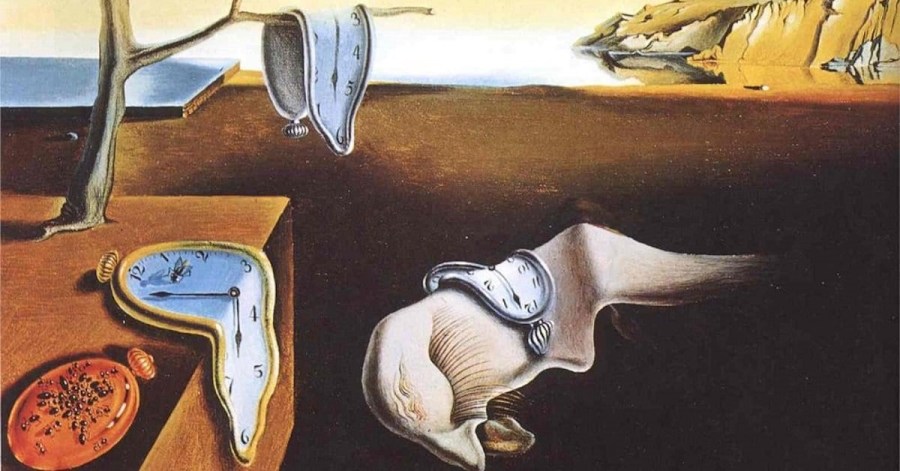
One of the greatest influences on Surrealist photography was the art movement known as Surrealism. Before cameras were invented the only ways artists could express such ideas and concepts was through paint and canvas. Salvador Dali is one of the most influential and historically recognised Surrealist painters throughout history. He was a Spanish artist renowned for his technical skill, precise draftsmanship and his iconic surrealist images that greatly contributed to the Surrealist movement in the early 20th century. One of his most famous pieces of work was ‘The Persistence of Memory’ painted in 1931; it depicted the images of soft melting pocket watches over objects unidentifiable and completely unrelated to their surroundings. It was believed Dahli was incorporating an understanding of the world introduced by Albert Einstein‘s theory of special relativity. He was later asked by Ilya Prigogine whether this was correct, however he replied that ‘the soft watches were not inspired by the theory of relativity, but a Surrealist interpretation of Camembert melting in the sun.’ Nevertheless, the uncertainty behind the true meaning of his work and the variability in peoples’ interpretations of its meaning truly embodied the ideology of surrealism (being something that is dreamlike and with no sense completely open to interpretation). Therefore making Dali one of the founding fathers of surrealism and what I believe to be one of the biggest influencers of cinemagraphic Surrealism as a standalone photographic style.
Interestingly, even before this time period Dali was found to be an avid reader of Sigmund Freud’s psychoanalytic theories. As possibly one of the biggest influences on Surrealism; Freud was someone who was interested in understanding the imagery of our dreams. Dali’s most significant contribution towards the Surrealist movement was what he referred to as the “paranoiac-critical method,” (a mental exercise used to access the subconscious in order to enhance artistic creativity). This influence was significant to both Surrealism as a movement and to both art and photography as two interchanging practices.
Surrealism With Photography
At the time that the Surrealist art movement became popular photography was still in its infancy. However, despite the fact analogue was the predominant medium at that time, many Surrealist photographers saw the Surrealist movement as an opportunity to challenge themselves and to experiment within the dark room. Photography’s connection with Surrealism was forged in its ability to represent the world in strange and abstract ways. Techniques such as double exposure, photomontages, distortion, rotation, solarisation and reversed tonality were used to ‘disturb’ the viewers ability to recognise things as they were and this is where dreams and reality begin to merge and cross over. Surrealist photographers explored the use of space and human bodies to depict strange and haunting scenarios whilst making everyday objects appear sinister and extraordinary.
Andre Breton stated the objective of surrealism was to “resolve” the previously contradictory conditions of dream and reality into an absolute reality, a super-reality.” Dreams were an integral part of their image making process. Sigmund Freud’s work into dream analysis and the unconscious mind became important to Surrealist photographers in terms of accessing their imagination to produce art; especially in a way that had never been explored before. It challenged photographers who only had access to minimal recourses yet to be developed with the capability to distort and manipulate imagery within a different style. The introduction of Surrealism to photography was a major pivotal point within history, because it began to redefine the way photographers viewed their practice and challenged the boundaries of the work that they were able to create. Surrealism was a new form of art and a concept that completely and utterly changed the art world.
Man Ray
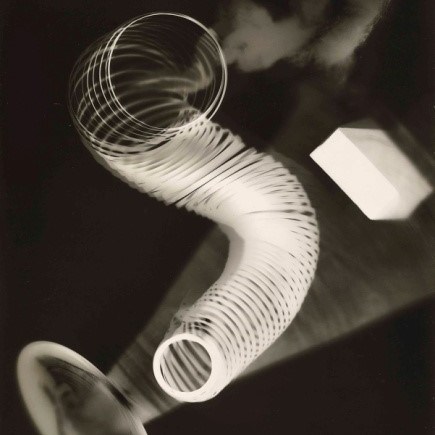
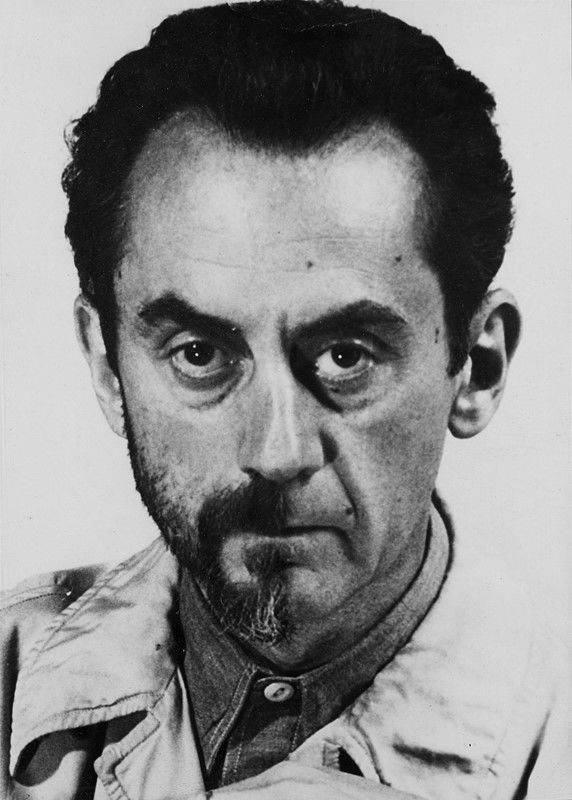
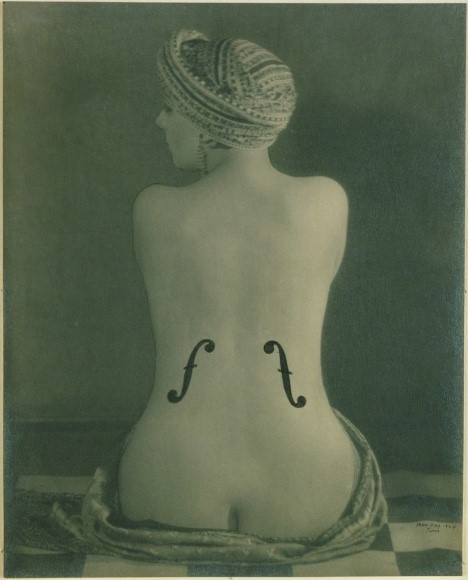
Surrealist photography sought to challenge ideas of normality through creating imagery which included strange shapes, floating body parts and bizarre landscapes. Man Ray (1890-1976) is probably one of the most famous Surrealist photographers of the early 20th century. Ray’s artistic beginning came about during the Dada movement, his work shaped by the trauma of WW1. Ray created Surrealist imagery through the medium of analogue photography and photomontages, by depicting household objects and manipulating them into strange creatures. Man Ray also juxtaposed random objects and positioned them in images that you wouldn’t normally find them, in addition to his variety of photomontages that he produced using light sensitive paper in the dark room. Man Ray was a versatile artist as well as a photographer and he used his experience of creating sculpture film drawing and painting to create new imagery using photography which he called ‘rayograms.’ These were created by placing an object in contact with a photosensitive surface in the dark and exposing both to light. Together with solarisation and the over exposure of the negatives, Man Ray created a photographic style which he used to create his signature fashion portraits.
In particular, Man Ray’s photomontages have been influential to my own work. His use of negative space juxtaposing the range of circular shapes and materials opt for a very interesting design. The use of black and white also allows us to focus on the texture of the objects within the image (unable to identify only particular aspects) we can use our imagination as to what the objects and purpose of the image really is as with any other Surrealist piece of art.
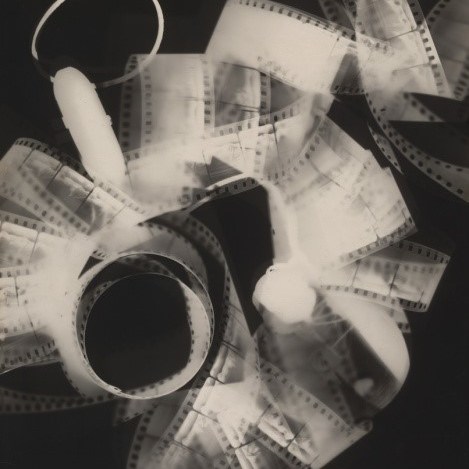
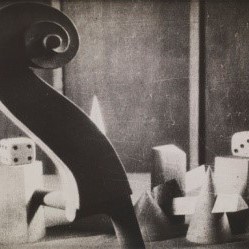
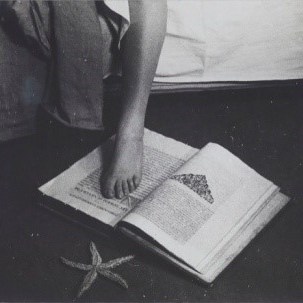
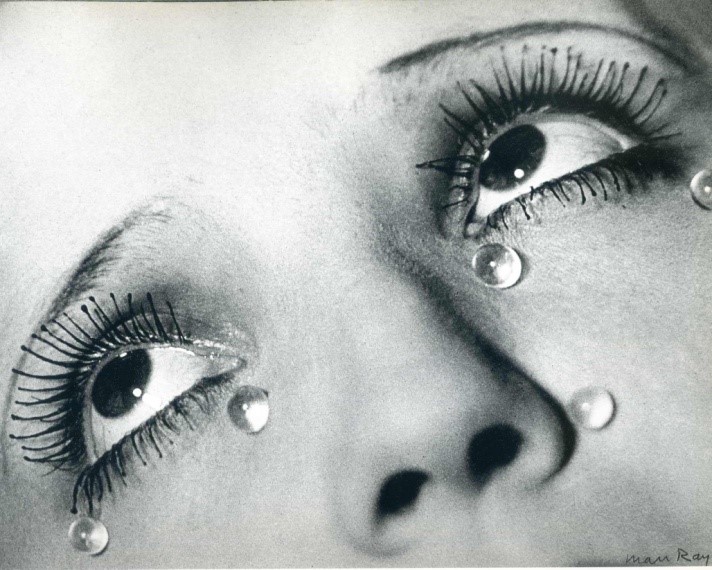
Looking in greater detail at the style of Man Ray’s work you can also see a very cinematic element within some of his most famous surrealist photographs. Glass Tears taken in 1932 used a surrealist technique but combined other aspects that contribute towards a very cinematic effect. Harsh shadows and deep contrasts in combination with the element of black and white and the over dramatic facial expression, evoke images of an old black and white Hollywood movie. The Cinematic element can also be identified within a range of his other works; use of harsh shadows, dark contrasts, lots of negative space (allow us to focus on the subject of the image, just like we would in a movie) and close-ups so we can see the detail and texture within the subject. The techniques he used demonstrate how historically influential Man Ray was towards modern day cinematic Surrealism.
Dora Maar
Similarly to Man Ray, Dora Maar was also a Surrealist analogue photographer. She created a series of images embodying the same aspects of Cinema and Surrealism that Man Ray included within his own work, making her equally as historically influential with modern day cinematic surrealism.
Dora Maar was a French photographer, painter and poet (1907-1997) who worked in the 90s and 20s with a Rolleiflex camera and predominately worked on commercial photography for fashion magazines (similar to that of Man Ray). Her fashion photography was heavily influenced by her Surrealism and can be seen by her use of mirrors and contrasting shadows. Ironically her experimental work with photogram’s and darkroom photography were only found after her death. Much of Maar’s photography and photomontages focused on the Surrealist themes of eroticism, sleep and the unconscious. She deliberately used cropped frames, dramatic angles, juxtaposition and extreme close-ups to create Surreal photography. Many of her scenes disorientated the viewer and created new worlds filled with fantasy.
Maar was influenced by Man Ray; her work frequently being compared to his (once again depicting the struggle of a woman being recognised as an artist in her own right separate from any male figures in her life). She was also heavily influenced by Picasso (her ex lover) with whom she experienced a very tumultuous relationship which led to the decline of her mental health. Following her break with Picasso in the mid 40’s and the horrors of both the Spanish Civil War and WW2, Maar was consumed with depression and was institutionalised in a psychiatric asylum where she experienced treatment such as electroshock therapy. Following her treatment, Picasso bought Maar a house in Ménerbes, a small village in the Vaucluse. Maar then lived alone, consumed by her depression induced by Picasso and surrounded by her art materials; she continued to paint until her death. Such unfortunate circumstances could have influenced Maar’s work; generating an almost Surrealist trauma for her. In response her Surrealist photography could have been used as a strategy to cope with her feelings of isolation. When looking at Surrealist work you often feel quite dislocated from reality, this could perhaps explain some of the reasoning behind her work since she would have been experiencing intense feelings of isolation at this time.
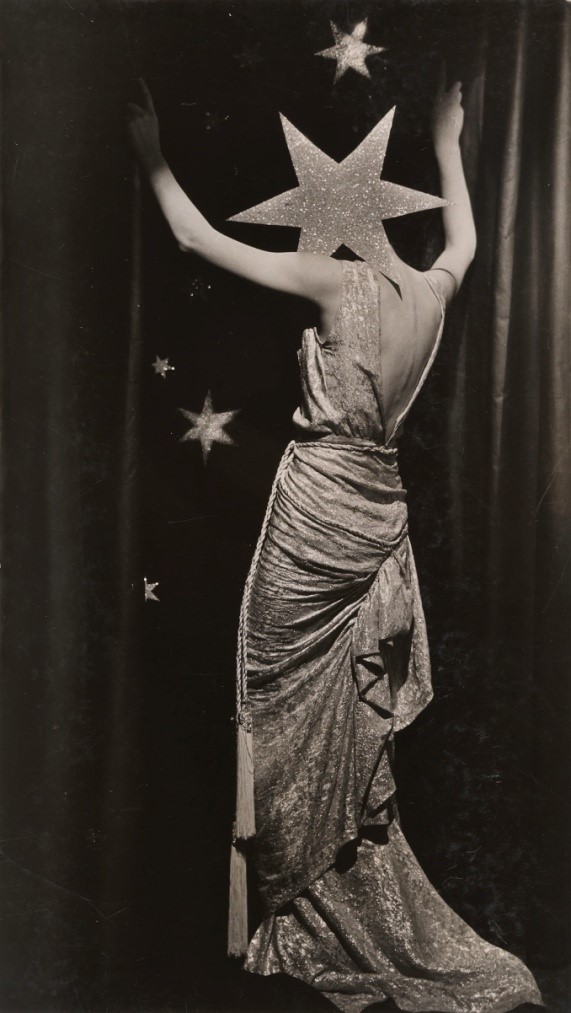

Other Surrealist photographers of the same time such as, Andre Kertesz and Otto Umbehr, used to rotate and distort their images. These photographers used their technical skills within the darkroom to create unusual, shocking, scary images which went beyond reality. However, their work was more than just producing images that unsettled the viewer. Their objective was to re-interpret photography as a medium and give it new meaning. The famous photo by Dora Maar entitled ‘Portrait of Ubu’ featured an armadillo foetus in formaldehyde. Even though the image did not use any specific Surrealist techniques the final outcome was both bizarre and grotesque.
Lee Miller
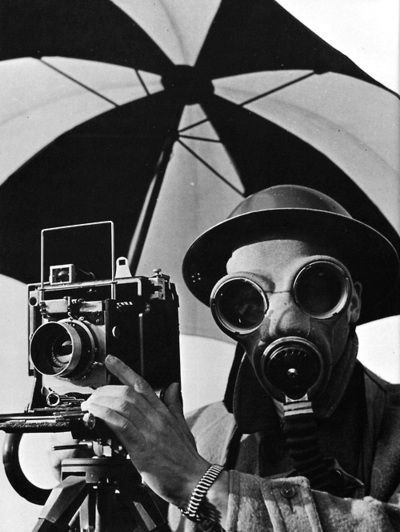
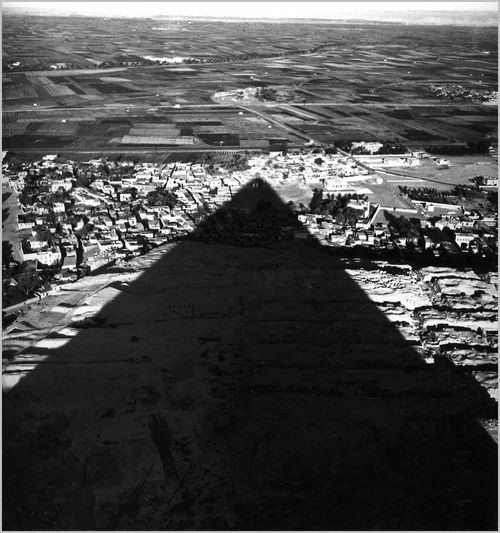
Similarly, Elizabeth “Lee” Miller was also a fashion photographer and a war correspondent for Vogue. In 1929 Miller became an apprentice photographer to Man Ray and together with Ray discovered the photographic technique of Solarisation. Not only is Miller’s work similar to Maar’s in terms of style of photography, but she was also influenced by Man Ray, who was a great influence on Maar. Throughout her career she used surrealist techniques to create photography which focused on capturing new perspectives and the juxtaposition of objects. For example, her photograph of the Great Pyramid of Giza is taken from the perspective of the summit and consists only of a huge triangular shadow dominating the town bellow; and it is the unique perspectives she chose from which to take the photograph became her signature styles. Another one of Millers most famous photographs is of a life photographer David Scherman entitled ‘dressed for war,’ 1942. The photograph depicts Scherman wearing a gas mask and holding a camera shaded underneath an umbrella. Although not surreal in itself, the components of the image together could be used in order to reflect the surreal concept of war. Miller’s choice to use the gas mask to conceal the man’s face creates an unsettling atmosphere because an additional element of mystery has been added to the work. This element of mystery is a key theme within surrealist work as a whole and when combined with the unsettling atmosphere which is created by including the gas mask, it evokes images of violence and war; arguably Miller’s photograph is very surrealist. The umbrella includes an element of juxtaposition, because something so delicate is being paired with an object that evokes images of violence. Negative space is also an incredibly significant key aspect within Miller’s work, as can be seen within her other photographs. The white negative space surrounding the focus of the photograph suggests a white void, further creating this eerie, ethereal state that can be seen within her other surrealist work.
Florence Henri
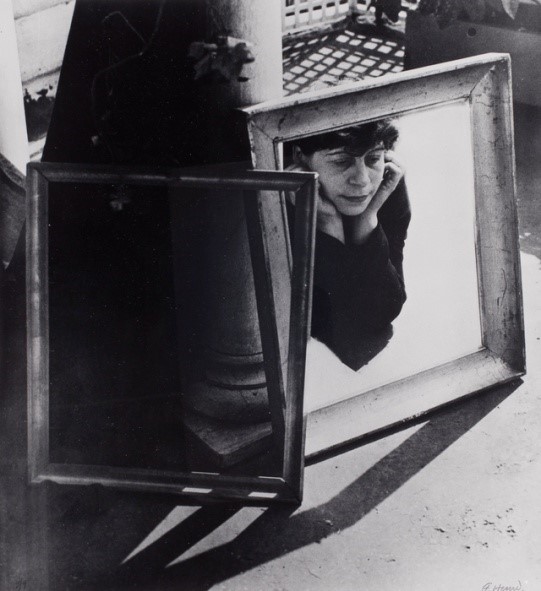
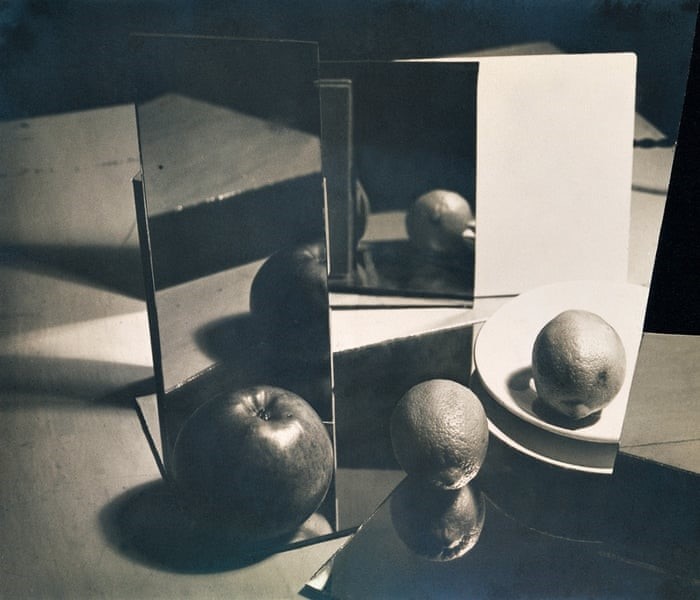
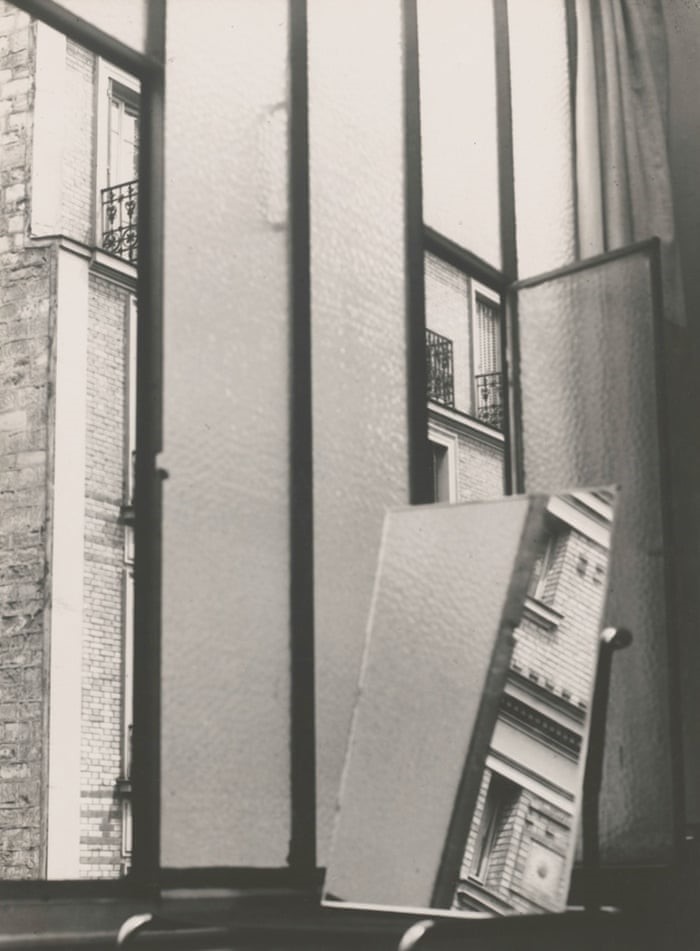
Another photographer, Florence Henri was born in New York in 1893. She left the United States at the age of two after the death of her mother. Henri spent the majority of her childhood travelling between maternal relatives in Silesia, family homes in London and the Isle of Wight and a convent school situated in Paris. She relocated to Berlin during WW1 and worked briefly as an accompanist for silent films, using the skills she had obtained whilst she trained as a pianist. Similarly to Miller, she was also influenced by war within her work. However, she eventually abandoned her musical career to persue her love for painting. Henri was denied entry to France in 1924 and was declared “stateless.” She them moved to Paris in 1925 and began studying painting with Andre Lhote and Fernand Leger; she worked during the visual phase of late cubism.
Similar to Le Millers photography, Henri used a lot of negative space within her work; experimenting with reflections and perspective whilst using different shapes and objects. She incorporated different sized frames and mirrors into her work, demonstrating Andre Lhote and Fernand Leger’s influence on her as a photographer with whom she worked with during the visual idiom of cubism. The way she incorporates geometric shapes, manipulates shadows and experiments within different perspectives creates depth within her photographs: conveying the extent of her influence within the movement of cubism.
Jerry N. Uelsmann
Jerry N. Uelsmann was an American photographer born on the 11th June 1934. He was an early exponent of photomontage in the 20th century in America and he worked mainly using darkroom effects that foreshadowed the use of Photoshop. Uelsmann was able to create Surrealist images in the late 20th century which was a process that was led by his ex-wife at the time. Uelsmann received a Guggenheim Fellowship in 1967 and the Lucie Award in Fine Art in 2015. He is part of the Royal Photographic Society of Great Britain and founder of The Society of Photographic Education.
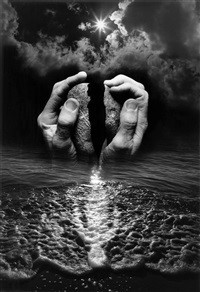
When reflecting upon Uelsmann as an inspiration for my own work I focused upon his untitled – hands and ocean. This piece embodies all the ideals of surrealism because it depicts something both ethereal and dreamlike. Within the image two large hands are emerging from the sea and breaking a rock in half, from the rock a spirit like form reflects onto the sea foam like a beam of light. Surrounding the hands there are clouds and a bright star in the sky. When looking at the image my first thought was that it held a biblical meaning. The star could symbolise the North Star and the hands could be the hands of God; by breaking the rock in half above the sea it could be refereeing to Moses parting the sea, and the spirit like figure emerging from the rock could be the Holy Spirit. All aspects of the image suggest something biblical representation within the imagery and Uelsmann has created this through his Surrealist work. Furthermore, the dark clouds create a very eerie atmosphere, reinforcing the often uneasy feeling that you experience when looking at Surrealist art.
Luke Gram
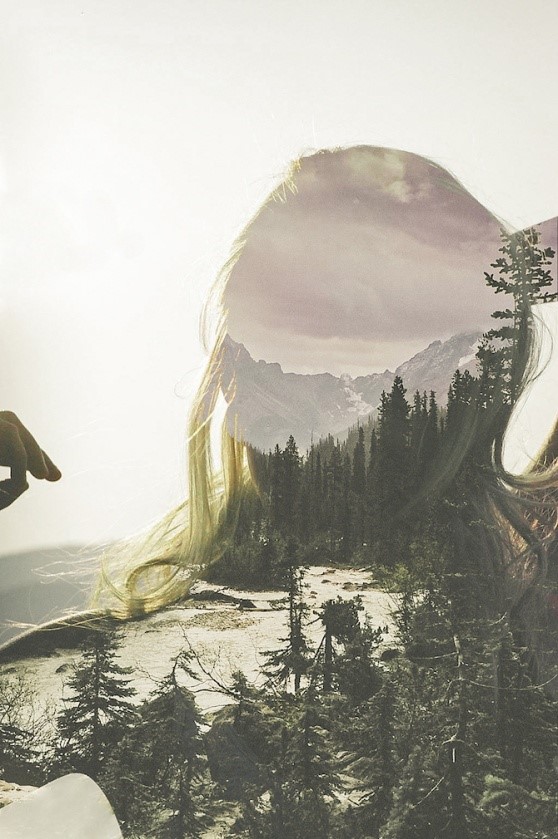
Luke Gram is a Canadian photographer who combines landscapes and silhouettes to create a series of serene images. Gram uses the technique of double exposure in order to achieve his dreamlike effect. To create these dreamlike images Gram travels through Asia, Africa and Europe in order to capture his amazing landscapes. Gram also specialises in portraiture and landscape photography separately which both equally inspire his signature style.
Gram uses double exposed landscapes within his portraits in order to conceal the identity of the subject. Within all of his photographs Gram fades the landscape over the face of the subject, creating a sense of mystery. His use of light creates an airy and dreamy effect through editing his images with low saturation, lightening the exposure within his images and fading the landscape within the double exposure. The cool colour composition reinforces the light and airy feel that he tries to create. Likewise, Gram uses a lot of negative white space within his photographs allowing the double exposure to be the main focus of the image. The negative space also allows his photographs to be more minimalist, adding to the light and airy feel he tries to create. Techniques such as these can be seen within a few other photographer’s work that I have researched throughout my project.
Conclusion
Cinematic Surrealism is an important style of photography and the contribution of some of the earliest photographers cannot be underestimated in terms of their impact and influence on photography as we know it today. The opportunity to explore the work of photographers such as Dora Maar and Lee Miller, all of which influenced modern day photography and allowed it to evolved into different individual styles within the medium, has allowed me to expand my knowledge of photography as a whole and develop my skills within my own chosen project pathway; cinematic surrealism.
 Ellen Louise McDermott